
ANNUNCIO PUBBLICITARIO
FINE ANNUNCIO PUBBLICITARIO
|
© I contenuti di questa pagina (escluse le immagini di pubblico dominio) sono di proprietà esclusiva dell'autore Alberto Tucci. Ne è vietata la copia, la riproduzione e l'utilizzo anche parziale in ogni forma. |
| QUESTA SCHEDA È UNICA E ORIGINALE IN INTERNET - aggiornamento del 02-07-2026 |
CARTAMO |

LEGGERE LA SCHEDA IN TUTTE LE SUE SEZIONI PER UNA CORRETTA INFORMAZIONE SULLE PRECAUZIONI D'USO
CLASSIFICAZIONE BOTANICA...
| Dominio Eukaryota Regno Plantae Clade Angiospermae Clade Eudicotyledones Clade Asteridae Ordine Asterales Famiglia Asteraceae Sottofamiglia Carduoideae Tribù Cardueae Sottotribù Carduinae Genere Carthamus Specie Carthamus tinctorius |
Famiglia: Asteraceae |
SINONIMI DEL NOME VOLGARE...
| Zafferanone Coltivato, Zafferano Bastardo, Alazor Bastardo, American Saffron, Aspir, Bastard Saffron, Benibana, Cartama, Carthame, Carthami Flos, Carthami Semen |
SINONIMI DEL NOME BOTANICO...
| Calcitrapa Tinctoria (L.) Röhl., Carduus Tinctorius (L.) Falk, Carduus Tinctorius Ehrh., 1788, Carthamus Glaber Burm.fil., Carthamus Inermis Hegi, Carthamus Tinctorius Var. Albus Alef., 1866, Carthamus Tinctorius Var. Croceus Alef., 1866, Carthamus Tinctorius Var. Flavus Alef., 1866, Carthamus Tinctorius Var. Spinosus Kitam., Carthamus Tinctorius Var. Tinctorius, Carthamus Tinctorius Var. Typicus Schweinf., 1889, Cathamus Tinctorius L., Centaurea Carthamus E.H.L.Krause |
DESCRIZIONE BOTANICA...
| PIANTA ERBACEA ANNUALE ALTA 60-150 CM, CON FUSTO ERETTO, RAMIFICATO IN ALTO, SPINESCENTE. FOGLIE ALTERNE, SESSILI, LANCEOLATE O OVATO-LANCEOLATE, CON MARGINE DENTATO-SPINOSO. CAPOLINI TERMINALI SOLITARI O POCHI, CON INVOLUCRO DI BRATTEE FOGLIACEE SPINOSE. FIORI TUBULOSI ERMAFRODITI DI COLORE GIALLO, ARANCIO O ROSSO. FRUTTO È UN ACHENIO OBOVOIDALE LISCIO E BIANCO, SENZA PAPPO. |
FIORITURA O ANTESI...
| LUGLIO, AGOSTO, SETTEMBRE, ESTATE, INIZIO AUTUNNO |
| COLORI OSSERVATI |
| ________ ARANCIO |
| ________ BIANCO ARGENTATO |
| ________ GIALLO ARANCIO |
| ________ GIALLO CHIARISSIMO |
| ________ GIALLO DORATO |
| ________ ROSSO ARANCIO |
HABITAT...
| Originaria del Medio Oriente e dell'Asia Minore, ma oggi coltivata in diverse regioni del mondo con clima caldo e temperato-caldo. Predilige un'esposizione in pieno sole e cresce meglio in terreni ben drenati, fertili e anche leggermente salini. È resistente alla siccità e si adatta a climi aridi e semi-aridi. La sua coltivazione è diffusa principalmente per l'estrazione dell'olio dai semi e per l'utilizzo dei fiori come colorante alimentare e tessile. Si trova spesso coltivata in campi aperti e soleggiati, in rotazione con altre colture. In Italia è coltivato soprattutto nel centro-sud. |
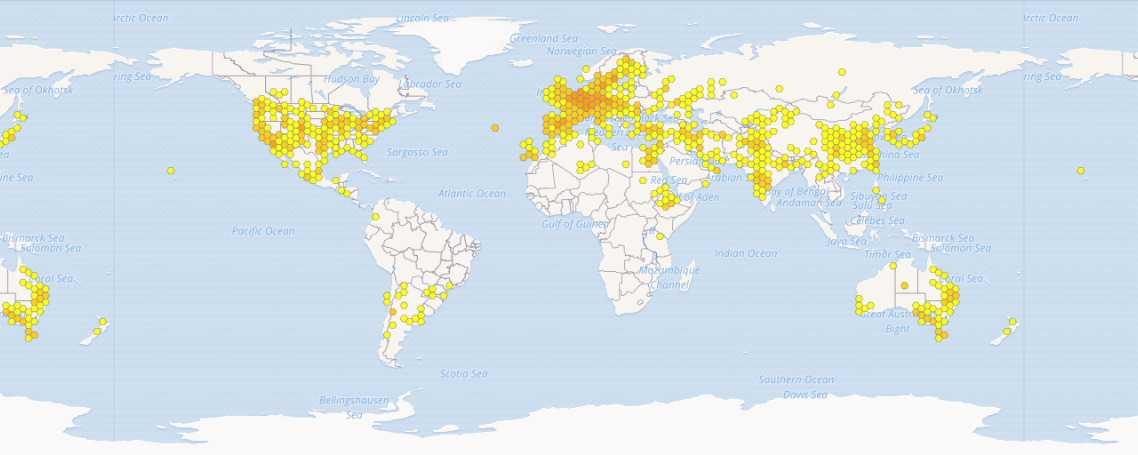
| DISTRIBUZIONE IN BASE ALLE OSSERVAZIONI UMANE |
 |
ANNUNCIO PUBBLICITARIO
FINE ANNUNCIO
PERIODO BALSAMICO...
| ESTATE (LUGLIO-SETTEMBRE) |
DROGA UTILIZZATA...
| (Parti ricche in principi attivi) |
| FIORI ESSICCATI (FLOS CARTHAMI), IN PARTICOLARE DAI TUBULI COROLLINI PRIVI DI RICETTACOLO |
AROMI DELLA DROGA...
| DEBOLE O QUASI ASSENTE, TALVOLTA LEGGERMENTE ERBACEO, PAGLIERINO, CON NOTE FLOREALI MOLTO TENUI |
SAPORI DELLA DROGA...
| LEGGERMENTE AMARO, POCO AROMATICO, TALVOLTA DEBOLMENTE ASTRINGENTE, CON RETROGUSTO ERBACEO |
TOSSICITÀ:  RELATIVA A QUANTO SPECIFICATO RELATIVA A QUANTO SPECIFICATO |
| Motivazione: L’olio alimentare di semi di Carthamus tinctorius L. presenta generalmente buona tollerabilità alle dosi alimentari e nutraceutiche. Estratti concentrati dei fiori e preparazioni fitoterapiche tradizionali possono invece aumentare il rischio di sanguinamento per attività antiaggregante e vasodilatatrice documentata farmacologicamente. Sono riportati possibili effetti uterostimolanti ed emmenagoghi con rischio teorico in gravidanza. Reazioni allergiche e disturbi gastrointestinali lievi risultano occasionalmente documentati. I dati tossicologici complessivi rimangono moderatamente limitati e fortemente dipendenti dalla preparazione utilizzata. |
| EFFICACIA: !! DIPENDENTE DALLE SPECIFICHE E DALLE FORME TERAPEUTICHE |
| Motivazione: Carthamus tinctorius L. presenta evidenze cliniche e sperimentali limitate a specifici estratti, frazioni o preparazioni tradizionali, soprattutto relativi ai fiori e all’olio dei semi. Studi clinici controllati e meta-analisi risultano disponibili principalmente nell’ambito della medicina tradizionale cinese per effetti emoreologici, cardiovascolari e ginecologici, ma la qualità metodologica è eterogenea e spesso legata a formulazioni multi-componente. Studi in vivo e in vitro documentano attività antinfiammatoria, antiossidante, vasodilatatrice, ipolipidemizzante e antiaggregante. L’efficacia terapeutica non può essere generalizzata all’intera specie né a tutte le preparazioni fitoterapiche disponibili. |
PRINCÍPI ATTIVI...
| Acidi Grassi E Lipidi: acido linoleico, acido oleico, acido palmitico, acido stearico, acido arachidico, acido behenico, acido lignocerico Flavonoidi: idrossisafflor giallo A, safflor giallo A, safflor giallo B, cartamidina, luteolina, quercetina, kaempferolo, apigenina, rutina Pigmenti Chinocalconici: cartamina, precartamina, safflomina A, safflomina C, cartamone Composti Fenolici E Acidi Fenolici: acido clorogenico, acido caffeico, acido ferulico, acido p-cumarico, acido protocatecuico, acido vanillico, acido gallico Fitosteroli: beta-sitosterolo, campesterolo, stigmasterolo, brassicasterolo Lignani: matairesinolo, secoisolariciresinolo, lariciresinolo Tocoferoli: alfa-tocoferolo, gamma-tocoferolo, delta-tocoferolo Poliacetileni: tridecaene, tridecadiene derivati poliacetilenici Saponine: saponine triterpeniche Serotoninoidi E Ammine Biogene: serotonina tracce, tiramina tracce Polisaccaridi E Fibre: arabinogalattani, pectine, cellulosa, emicellulose Proteine E Peptidi: albumine, globuline, peptidi bioattivi Vitamine: vitamina E, vitamina K, vitamina B1, vitamina B6, folati Minerali E Oligoelementi: potassio, magnesio, calcio, fosforo, ferro, zinco, manganese Composti Volatili E Olio Essenziale Tracce: esanale, nonanale, linalolo, beta-cariofillene, fitolo |
PROPRIETÀ E INDICAZIONI (Dettagli di Fitoterapia)
Confermate da studi scientifici e clinici Sono disponibili studi clinici controllati, revisioni e meta-analisi relativi a preparazioni contenenti Carthamus tinctorius L., soprattutto nella medicina tradizionale cinese, con indicazioni cardiovascolari, cerebrovascolari ed emoreologiche. Tuttavia, gran parte degli studi riguarda formulazioni multi-componente e preparazioni iniettabili standardizzate, rendendo difficile attribuire con certezza gli effetti alla sola specie. L’attività antiaggregante ed emoreologica rappresenta l’effetto farmacologico più coerentemente documentato. Studi clinici e osservazionali hanno riportato miglioramenti di parametri emoreologici e microcircolatori in contesti cardiovascolari e ischemici. Le evidenze risultano moderate ma metodologicamente eterogenee. Sono disponibili dati clinici preliminari relativi a ischemia cerebrale, angina e disturbi vascolari periferici mediante preparazioni standardizzate derivate dai fiori contenenti idrossisafflor giallo A. Le evidenze non raggiungono tuttavia un livello sufficiente per una validazione fitoterapica universale indipendente dalle specifiche formulazioni. Per l’olio di semi di Carthamus tinctorius L. esistono studi clinici nutrizionali relativi alla modulazione lipidica e metabolica grazie all’elevato contenuto di acido linoleico. Gli effetti risultano modesti, variabili e fortemente dipendenti dal contesto dietetico complessivo. Non risultano disponibili evidenze cliniche robuste e universalmente confermate per utilizzi oncologici, immunomodulanti o endocrini della specie. Con riscontro positivo in vitro o in modelli animali o nella fitoterapia documentata Attività antinfiammatoria. Studi in vitro e in vivo animale hanno documentato riduzione di mediatori infiammatori e modulazione delle vie infiammatorie da parte dei flavonoidi e dei pigmenti chinocalconici dei fiori. Attività antiossidante. Numerosi studi sperimentali in vitro hanno evidenziato capacità scavenger radicalica e protezione dallo stress ossidativo attribuite a flavonoidi, polifenoli e tocoferoli. Attività vasodilatatrice e microcircolatoria. Studi farmacologici e modelli animali hanno mostrato effetti sulla vasodilatazione periferica, sulla fluidità ematica e sulla microcircolazione. Evidenze coerenti con l’uso tradizionale cardiovascolare asiatico. Attività antiaggregante piastrinica. Studi in vitro e in vivo animale documentano effetti antiaggreganti ed antitrombotici soprattutto per l’idrossisafflor giallo A. Mancano conferme cliniche definitive isolate dalla fitoterapia multi-componente. Attività neuroprotettiva. Modelli sperimentali animali di ischemia cerebrale e danno ossidativo hanno mostrato possibili effetti neuroprotettivi di alcuni estratti e flavonoidi della specie. Evidenze limitate al contesto preclinico. Attività ipolipidemizzante e metabolica. Studi animali e nutrizionali hanno riportato modulazione del metabolismo lipidico e miglioramento di alcuni parametri metabolici correlati agli acidi grassi insaturi dell’olio di semi. Evidenze cliniche limitate. Attività epatoprotettiva. Alcuni studi sperimentali animali suggeriscono riduzione del danno ossidativo epatico e modulazione enzimatica. Le evidenze risultano preliminari. Attività uterostimolante ed emmenagoga. Documentata farmacologicamente e coerente con l’uso tradizionale ginecologico asiatico. Evidenze sperimentali dirette disponibili. Attività antiproliferativa. Alcuni studi in vitro hanno mostrato effetti antiproliferativi su linee cellulari tumorali mediante flavonoidi e pigmenti chinocalconici. Non esistono conferme cliniche oncologiche. Uso storico e nella tradizione Uso tradizionale nella medicina cinese come pianta “attivatrice della circolazione del sangue” nelle stasi ematiche, nei disturbi mestruali, nel dolore traumatico e nelle condizioni ischemiche. Uso tradizionale come emmenagogo e regolatore del ciclo mestruale in differenti medicine asiatiche e medio-orientali. Uso etnobotanico come colorante alimentare e tintorio grazie alla presenza della cartamina nei fiori. Uso alimentare dell’olio di semi come fonte lipidica ricca di acidi grassi insaturi. Uso tradizionale esterno in impacchi e preparazioni topiche per ecchimosi, traumi e dolori articolari. Uso tradizionale come coadiuvante cardiovascolare e circolatorio nelle medicine popolari asiatiche.
Bibliografia (proprietà e indicazioni)
| AVVERTENZE
(Le avvertenze includono segnali di rischio basati su evidenze precliniche, plausibilità farmacologica o casi isolati) L’ASSOCIAZIONE CON FARMACI ANTICOAGULANTI, ANTIAGGREGANTI PIASTRINICI O TROMBOLITICI RICHIEDE CAUTELA PER POSSIBILE AUMENTO DEL RISCHIO EMORRAGICO. EVIDENZA FARMACOLOGICA E OSSERVAZIONALE DERIVATA DAGLI EFFETTI ANTIAGGREGANTI DEI FLAVONOIDI E DEI PIGMENTI CHINOCALCONICI DELLA SPECIE. ALCUNI STUDI SPERIMENTALI SUGGERISCONO POSSIBILI EFFETTI IPOTENSIVI E VASODILATATORI; L’USO CONCOMITANTE CON FARMACI ANTIPERTENSIVI RICHIEDE PRUDENZA. EVIDENZA PREVALENTEMENTE IN VIVO ANIMALE E FARMACOLOGICA. L’ATTIVITÀ EMMENAGOGA E STIMOLANTE SULLA MUSCOLATURA UTERINA È STATA DOCUMENTATA IN STUDI FARMACOLOGICI SPERIMENTALI E NELLA PRATICA TRADIZIONALE ASIATICA. EVIDENZA ETNOFARMACOLOGICA E SPERIMENTALE DIRETTA. SONO STATI RIPORTATI OCCASIONALI DISTURBI GASTROINTESTINALI LIEVI QUALI NAUSEA, DISCOMFORT ADDOMINALE E DIARREA SOPRATTUTTO CON ESTRATTI CONCENTRATI O DOSAGGI ELEVATI. EVIDENZA CLINICA LIMITATA E OSSERVAZIONALE. L’OLIO DI SEMI AD USO ALIMENTARE PRESENTA GENERALMENTE BUONA TOLLERABILITÀ; TUTTAVIA LE PREPARAZIONI CONCENTRATE DEI FIORI UTILIZZATE NELLA MEDICINA TRADIZIONALE CINESE POSSONO DIFFERIRE SIGNIFICATIVAMENTE PER COMPOSIZIONE FITOCHIMICA E ATTIVITÀ BIOLOGICA. EVIDENZA FARMACOGNOSTICA E FITOCHIMICA DIRETTA. LE EVIDENZE CLINICHE DISPONIBILI RISULTANO SPESSO RIFERITE A FORMULAZIONI MULTI-COMPONENTE DELLA MEDICINA TRADIZIONALE CINESE, LIMITANDO L’ATTRIBUZIONE UNIVOCA DEGLI EFFETTI TERAPEUTICI E DEGLI EVENTI AVVERSI ALLA SOLA SPECIE CARTHAMUS TINCTORIUS L. EVIDENZA METODOLOGICA DERIVATA DALLA LETTERATURA CLINICA DISPONIBILE. |
| CONTROINDICAZIONI
(Le controindicazioni si basano su evidenze cliniche dirette, cioè dati da studi clinici, osservazionali o casistiche solide che dimostrino che l’uso della pianta è da evitare in specifiche condizioni o popolazioni) CONTROINDICATO L’USO DI PREPARAZIONI FITOTERAPICHE CONCENTRATE DI CARTHAMUS TINCTORIUS L. DURANTE LA GRAVIDANZA PER LA DOCUMENTATA ATTIVITÀ UTEROSTIMOLANTE ED EMMENAGOGA RIPORTATA NELLA MEDICINA TRADIZIONALE E SUPPORTATA DA DATI FARMACOLOGICI SPERIMENTALI. CONTROINDICATO NEI SOGGETTI CON DISTURBI EMORRAGICI ATTIVI O PREDISPOSIZIONE AL SANGUINAMENTO PER L’ATTIVITÀ ANTIAGGREGANTE PIASTRINICA ED EMOREOLOGICA DOCUMENTATA SPERIMENTALMENTE E CLINICAMENTE IN ALCUNE PREPARAZIONI TRADIZIONALI. CONTROINDICATO IN CASO DI IPERSENSIBILITÀ NOTA A CARTHAMUS TINCTORIUS L. O AD ALCUNI MEMBRI DELLE ASTERACEAE PER POSSIBILI REAZIONI ALLERGICHE DOCUMENTATE. CONTROINDICATO IN PROSSIMITÀ DI INTERVENTI CHIRURGICI INVASIVI PER POSSIBILE INCREMENTO DEL RISCHIO EMORRAGICO CORRELATO ALL’ATTIVITÀ ANTIAGGREGANTE E VASODILATATRICE DOCUMENTATA FARMACOLOGICAMENTE. |
INCOMPATIBILITÀ...
(Farmaci o sostanze da evitare per interazioni avverse o incompatibilità farmacologiche)
| ANTIAGGREGANTI PIASTRINICI |
| ANTICOAGULANTI |
| ANTICOAGULANTI (POTENZIAMENTO) |
| ASPIRINA |
| CLOPIDOGREL |
| FANS (FARMACI ANTINFIAMMATORI NON STEROIDEI) |
| OMEGA-3 AD ALTI DOSAGGI |
| TROMBOLITICI |
| WARFARIN |
ERBE SINERGICHE *...
(Erbe che possono aumentare l'efficacia fitoterapica)
| * Si tenga presente che talvolta la stessa erba indicata come sinergica o antagonista, potrebbe assumere entrambi i ruoli in funzione della dose utilizzata e/o della forma estrattiva o di trattamento come per es. nel Tè (verde o nero). Consultare sempre un fitoterapeuta per personalizzare le combinazioni in base al quadro clinico individuale. |
ERBE ANTAGONISTE *...
(Erbe che possono diminuire l'effetto fitoterapico o causare interazioni avverse)
ORGANI UMANI...
(Organi coinvolti nell'azione fitoterapica)
ESTRATTI...
Estratti standardizzati, integratori e omeopatici basati su evidenze scientifiche e sicurezza d'uso
| Estratti di Carthamus tinctorius L. (CARTAMO) Estratto secco standardizzato dei fiori di Carthamus tinctorius L. titolato in idrossisafflor giallo A. Le preparazioni standardizzate utilizzate nella fitoterapia e nella medicina tradizionale cinese impiegano generalmente estratti con contenuto variabile di flavonoidi totali e derivati chinocalconici. I titoli maggiormente studiati comprendono estratti standardizzati contenenti dal 1% al 10% di idrossisafflor giallo A. Le posologie sperimentali e fitoterapiche documentate oscillano generalmente tra 300 mg e 1000 mg al giorno di estratto secco suddiviso in due o tre somministrazioni, principalmente come supporto cardiovascolare, metabolico ed emoreologico. Estratto fluido idroalcolico dei fiori di Carthamus tinctorius L. Preparazione tradizionale impiegata soprattutto nella medicina asiatica per supporto circolatorio ed emmenagogo. I rapporti estrattivi maggiormente utilizzati sono 1:1 o 1:2 in etanolo variabile tra 25% e 45%. Le dosi tradizionalmente impiegate negli adulti variano orientativamente tra 1 mL e 4 mL fino a tre volte al giorno secondo la concentrazione estrattiva e la tollerabilità individuale. Tintura madre di Carthamus tinctorius L. ottenuta dai fiori. Utilizzata prevalentemente nella fitoterapia tradizionale e nella medicina complementare per disturbi circolatori femminili, dismenorrea e supporto microcircolatorio. Le dosi tradizionali riportate sono generalmente comprese tra 20 e 50 gocce da una a tre volte al giorno opportunamente diluite. Olio di semi di Carthamus tinctorius L. ad uso nutraceutico standardizzato in acido linoleico. Gli oli nutraceutici maggiormente utilizzati presentano concentrazioni di acido linoleico comprese generalmente tra il 65% e l’80%. L’impiego documentato riguarda soprattutto supporto metabolico e modulazione lipidica. Le dosi nutrizionali e nutraceutiche comunemente utilizzate negli studi clinici risultano comprese tra 5 g e 15 g al giorno. Capsule molli di olio di cartamo standardizzato in acidi grassi polinsaturi. Utilizzate come integratore metabolico e cardiovascolare. I prodotti standardizzati riportano generalmente un contenuto elevato di acido linoleico e vitamina E naturale. Le dosi comunemente impiegate oscillano tra 1000 mg e 3000 mg al giorno. Preparazioni iniettabili standardizzate contenenti derivati di Carthamus tinctorius L. e idrossisafflor giallo A sono utilizzate in alcuni sistemi sanitari asiatici per impiego cardiovascolare e cerebrovascolare specialistico. Tali preparazioni non sono destinate all’autoterapia fitoterapica e richiedono supervisione medica specialistica. Estratti combinati della medicina tradizionale cinese contenenti Carthamus tinctorius L. associato ad Angelica sinensis, Salvia miltiorrhiza o Paeonia lactiflora sono utilizzati principalmente in ambito cardiovascolare, ginecologico ed emoreologico. L’efficacia clinica disponibile deriva frequentemente da formulazioni multi-componente e non dalla sola specie isolata. Preparazioni omeopatiche di Carthamus tinctorius L. risultano documentate soprattutto in diluizioni D3, D6, D12, CH5 e CH9 nella pratica omeopatica tradizionale. Gli impieghi riportati riguardano prevalentemente disturbi mestruali, supporto circolatorio e disordini funzionali femminili. Non sono disponibili evidenze cliniche robuste di efficacia specifica secondo criteri evidence-based. |
TISANE...
Tisane, composizioni e preparazioni basate su evidenze scientifiche e sicurezza d'uso
| Infuso circolatorio tradizionale con Carthamus tinctorius L., Salvia miltiorrhiza Bunge e Angelica sinensis (Oliv.) Diels. Preparare con 1–2 grammi di fiori di cartamo, 2 grammi di radice di salvia rossa cinese e 1 grammo di angelica cinese in 250 millilitri di acqua calda per 10 minuti. Utilizzato tradizionalmente come supporto microcircolatorio ed emoreologico. L’associazione deriva dalla pratica fitoterapica della medicina tradizionale cinese. Utilizzare con cautela nei soggetti in terapia anticoagulante o antiaggregante. Infuso emmenagogo tradizionale con Carthamus tinctorius L., Paeonia lactiflora Pall. e Zingiber officinale Roscoe. Preparare con 1 grammo di fiori di cartamo, 2 grammi di radice di peonia e 500 mg di zenzero essiccato in 200 millilitri di acqua calda per circa 8–10 minuti. Utilizzato tradizionalmente nel supporto del flusso mestruale e nella dismenorrea funzionale. Evitare in gravidanza e nei soggetti con disturbi emorragici. Decotto metabolico con semi di Carthamus tinctorius L., Camellia sinensis (L.) Kuntze e Cinnamomum verum J. Presl. Preparare con 5 grammi di semi di cartamo leggermente triturati, 2 grammi di tè verde e 500 mg di corteccia di cannella in 300 millilitri di acqua mantenuta a lieve ebollizione per 10 minuti. Utilizzato come coadiuvante nutraceutico tradizionale nel metabolismo lipidico e glicemico. Le evidenze cliniche risultano moderate e dipendenti dalla formulazione complessiva. Infuso antiossidante e vasoprotettivo con Carthamus tinctorius L. e Ginkgo biloba L. Preparare con 1 grammo di fiori di cartamo e 1 grammo di foglie di ginkgo in 200 millilitri di acqua calda per circa 8 minuti. Utilizzato tradizionalmente per il supporto della microcircolazione periferica e dello stress ossidativo. L’associazione richiede prudenza per possibile incremento del rischio emorragico. Preparazione oleosa tradizionale per uso esterno con Carthamus tinctorius L., Arnica montana L. e Calendula officinalis L. I fiori vengono lasciati macerare in olio vegetale per applicazioni topiche tradizionali destinate a ecchimosi, traumi minori e tensioni muscolari. L’impiego è esclusivamente esterno su cute integra. Infuso digestivo leggero con Carthamus tinctorius L., Foeniculum vulgare Mill. e Mentha × piperita L. Preparare con 500 mg di fiori di cartamo, 1 grammo di semi di finocchio e 1 grammo di foglie di menta in 200 millilitri di acqua calda per 5–7 minuti. Utilizzato tradizionalmente come supporto digestivo e carminativo. Le evidenze dirette specifiche per Carthamus tinctorius L. in questo ambito risultano limitate. |
PREPARATI ALCOLICI...
| Vini, elisir, amari, tinture di CARTAMO
Preparazione alcolica (Tintura di Carthamus tinctorius): Prendere fiori essiccati di Carthamus tinctorius in quantità adeguata (per esempio 20–30 g di petali secchi) e metterli in un contenitore di vetro con chiusura ermetica. Coprire completamente con alcol etilico a 40 % (vino o alcol da erborista) in modo che la pianta sia sommersa. Lasciare macerare a temperatura ambiente per 4–6 settimane, agitare il contenitore ogni pochi giorni. Filtrare il liquido ottenuto e imbottigliare il macerato alcolico. Questa tintura può essere considerata l’equivalente di un “vino medicato” a base di cartamo. Uso consigliato: La tintura di Carthamus tinctorius viene utilizzata nella tradizione popolare e in erboristeria per favorire il benessere del microcircolo e della funzione digestiva, sostenere crampi mestruali leggeri e apportare composti antiossidanti dalla pianta. In genere si assumono 20–30 gocce di tintura (in acqua o tisana tiepida) 1–3 volte al giorno, oppure secondo indicazione di un erborista qualificato. La diluizione alcolica permette di estrarre composti liposolubili e favorire una conservazione prolungata. È importante non eccedere con l’alcol e adottare la preparazione solo se compatibile con la propria condizione di salute; in caso di gravidanza, allattamento o patologie croniche si raccomanda di consultare un terapeuta esperto. Bibliografia |
| Consultare il proprio medico prima di assumere queste bevande ed evitarne l'uso in caso di divieto di assunzione di alcol |
ANNUNCIO PUBBLICITARIO
FINE ANNUNCIO
USO ALIMENTARE...
Vedi anche Ricette con erbe officinali e Ricette vegetariane NOTE VARIE E STORICHE...
Ricerche di articoli scientifici su Carthamus tinctorius L. 👉

👉

👉

|

Autore: erbeofficinali.org
.png?r=1789457663)
Autore: erbeofficinali.org

Photo by Arnoldo Mondadori Editore SpA

Photo by Li Dajue

A yellow-flowered safflower variety
Photo by University of Arizona
Photo by University of Arizona

Autore: A.Tucci
 Altre Foto e Immagini di CARTAMO
