
ANNUNCIO PUBBLICITARIO
FINE ANNUNCIO PUBBLICITARIO

|
© I contenuti di questa pagina (escluse le immagini di pubblico dominio) sono di proprietà esclusiva dell'autore Alberto Tucci. Ne è vietata la copia, la riproduzione e l'utilizzo anche parziale in ogni forma. |
| QUESTA SCHEDA È UNICA E ORIGINALE IN INTERNET - aggiornamento del 25-06-2026 |
ZENZERO AFRICANO |

LEGGERE LA SCHEDA IN TUTTE LE SUE SEZIONI PER UNA CORRETTA INFORMAZIONE SULLE PRECAUZIONI D'USO
CLASSIFICAZIONE BOTANICA...
| Dominio Eukaryota Regno Plantae Clade Tracheophyta Clade Angiospermae Clade Monocotyledones Ordine Zingiberales Famiglia Zingiberaceae Sottofamiglia Zingiberoideae Tribù Zingibereae Genere Siphonochilus Specie Siphonochilus aethiopicus |
Famiglia: Zingiberaceae |
SINONIMI DEL NOME VOLGARE...
| African Ginger, Wild Ginger, Natal Ginger, Isiphephetho, Indungulo, Serokolo |
SINONIMI DEL NOME BOTANICO...
| Cienkowskia Aethiopica Schweinf., Cienkowskiella Aethiopica (Schweinf.) Y.K.Kam, Cienkowskiella Evae (Briq.) Y.K.Kam, Kaempferia Aethiopica (Schweinf.) Ridl., Kaempferia Aethiopica Benth., Kaempferia Aethiopica Var. Angustifolia Ridl., Kaempferia Dewevrei De Wild. & T.Durand, Kaempferia Ethelae J.M.Wood, Kaempferia Evae Briq., Kaempferia Natalensis Schltr. & K.Schum., Kaempferia Stenopetala K.Schum., Kaempferia Zambeziaca Gagnep., Siphonochilus Evae (Briq.) B.L.Burtt, Siphonochilus Natalensis (Schltr. & K.Schum.) J.M.Wood & Franks |
DESCRIZIONE BOTANICA...
| PIANTA ERBACEA PERENNE CON RIZOMA AROMATICO, FOGLIE GRANDI E LANCEOLATE, E FIORI APPARISCENTI DI COLORE ROSA-VIOLACEO CON GOLA GIALLA. CRESCE FINO A 1,5 M DI ALTEZZA |
FIORITURA O ANTESI...
| OTTOBRE NOVEMBRE DICEMBRE GENNAIO FEBBRAIO MARZO (STAGIONE DELLE PIOGGE AFRICANA) |
| COLORI OSSERVATI |
| ________ LILLÀ INTENSO |
| ________ ROSA |
HABITAT...
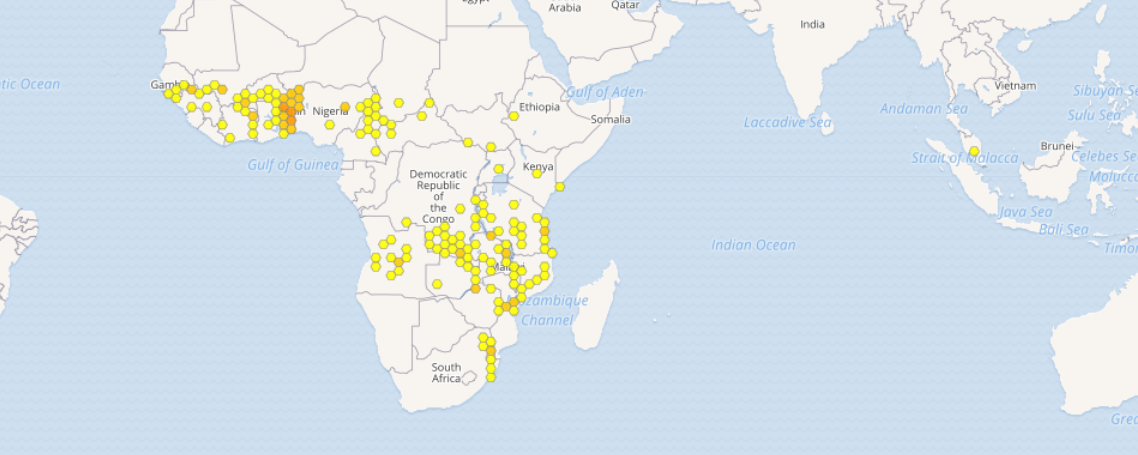
| PIANTA ORIGINARIA DELLE REGIONI SUBTROPICALI DELL'AFRICA MERIDIONALE E ORIENTALE, CRESCE NELLE FORESTE COSTIERE, NELLE ZONE BOSCHIVE UMIDE E AI MARGINI DELLE PALUDI. PREDILIGE TERRENI RICCHI DI HUMUS, BEN DRENATI E OMBREGGIATI, CON ELEVATA UMIDITÀ AMBIENTALE. |
| DISTRIBUZIONE IN BASE ALLE OSSERVAZIONI UMANE |
 |
ANNUNCIO PUBBLICITARIO
FINE ANNUNCIO
PERIODO BALSAMICO...
| RACCOLTA IDEALE TRA NOVEMBRE E GENNAIO, DURANTE LA PIENA FIORITURA |
DROGA UTILIZZATA...
| (Parti ricche in principi attivi) |
| RIZOMA FRESCO O ESSICCATO COSTITUISCE LA PARTE MEDICINALE PRINCIPALE, OCCASIONALMENTE VENGONO UTILIZZATE ANCHE LE RADICI SECONDARIE E, PIÙ RARAMENTE, I FIORI |
AROMI DELLA DROGA...
| INTENSAMENTE SPEZIATO-CITRATO, CON NOTE DOMINANTI DI ZENZERO, LIMONE E UN SOTTILE FONDO TERROSO-LEGNOSO |
SAPORI DELLA DROGA...
| PICCANTE E AROMATICO, CON UNA PRIMA NOTA AGRUMATA, SEGUITO DA CALORE ZINGIBERACEO E RETROGUSTO CANFORACEO LEGGERMENTE AMARO |
TOSSICITÀ:  BASSISSIMA BASSISSIMA |
| Motivazione: Gli studi tossicologici diretti sulla specie mostrano assenza di segni clinici di tossicità acuta nei ratti dopo somministrazione orale di rizomi polverizzati ed estratti etanolici e dietileterei fino a 2000 mg/kg, senza alterazioni istopatologiche significative. Le evidenze disponibili sono tuttavia limitate prevalentemente alla tossicità acuta e non consentono una valutazione completa della sicurezza nell'uso cronico. Livello di evidenza disponibile: studi tossicologici in vivo e limitati studi di citotossicità in vitro. |
| EFFICACIA: ++ BUONA |
| Motivazione: La specie è supportata da un uso fitoterapico tradizionale consolidato nell'Africa australe e da numerosi studi farmacologici diretti sulla specie, comprendenti studi in vivo su modelli animali e studi in vitro che documentano attività antiasmatica, antinfiammatoria, antiplasmodiale, analgesica e immunomodulante. Tuttavia mancano studi clinici controllati e revisioni sistematiche sull'uomo. Livello di evidenza disponibile: etnobotanica, studi in vivo animali e studi in vitro. |
PRINCÍPI ATTIVI...
| Olio essenziale: eucumene, deidroeucumene, furanoterpenoidi, siphonochilone, siphonochilone ossido, curzerenone, germacrone, zingiberene, beta-bisabolene, beta-sesquiphellandrene, ar-curcumene Sesquiterpeni: siphonochilone, siphonochilone ossido, eucumene, deidroeucumene, curzerenone, germacrone, zingiberene, beta-bisabolene, beta-sesquiphellandrene, ar-curcumene Furanoterpenoidi: siphonochilone, siphonochilone ossido Monoterpeni: canfora, borneolo, cineolo, alfa-pinene, beta-pinene, limonene Flavonoidi: derivati flavonoidici non completamente caratterizzati Acidi fenolici: derivati dell'acido caffeico, derivati dell'acido ferulico Fitosteroli: beta-sitosterolo, stigmasterolo Triterpeni: acido oleanolico, acido ursolico Polifenoli: composti fenolici totali Tannini: tannini condensati |
PROPRIETÀ E INDICAZIONI (Dettagli di Fitoterapia)
Confermate da studi scientifici e clinici Non sono disponibili studi clinici controllati, meta-analisi o revisioni sistematiche che abbiano dimostrato l'efficacia terapeutica di Siphonochilus aethiopicus (Schweinf.) B.L.Burtt nell'uomo. Con riscontro positivo in vitro o in modelli animali o nella fitoterapia documentata Attività analgesica. Diversi studi hanno evidenziato una riduzione del dolore in modelli animali, coerente con il tradizionale impiego per cefalea, dolori muscolari e reumatici. Evidenza: studi in vivo su modelli animali. Attività antiasmatica. Estratti del rizoma hanno mostrato effetti favorevoli in modelli sperimentali di broncospasmo e infiammazione delle vie respiratorie, coerentemente con il consolidato impiego tradizionale contro l'asma. Evidenza: studi in vivo su modelli animali e studi farmacologici. Attività antimalarica. Diversi costituenti isolati e gli estratti della specie hanno dimostrato attività nei confronti di Plasmodium falciparum. Evidenza: studi in vitro. Attività antimicrobica. Estratti e composti isolati hanno mostrato attività nei confronti di diversi batteri e microrganismi patogeni. Evidenza: studi in vitro. Attività antinfiammatoria. Estratti del rizoma hanno dimostrato riduzione di mediatori dell'infiammazione e attività antinfiammatoria in modelli sperimentali. Evidenza: studi in vitro e in vivo su modelli animali. Attività antiossidante. Gli estratti presentano attività scavenger nei confronti dei radicali liberi e capacità antiossidante misurabile in sistemi sperimentali. Evidenza: studi in vitro. Attività immunomodulante. Alcuni studi sperimentali suggeriscono un'attività modulatrice della risposta immunitaria; le evidenze rimangono limitate e non sono disponibili conferme cliniche. Evidenza: studi in vitro e in vivo su modelli animali. Le indicazioni sopra riportate derivano da studi sperimentali condotti direttamente sulla specie e risultano coerenti con il suo impiego nella fitoterapia tradizionale africana. Tuttavia l'assenza di studi clinici controllati non consente di confermarne l'efficacia terapeutica nell'uomo. Uso storico e nella tradizione Impiego tradizionale per asma e difficoltà respiratorie. Impiego tradizionale per raffreddore, influenza e congestione delle vie respiratorie. Impiego tradizionale per tosse. Impiego tradizionale per cefalea. Impiego tradizionale per febbre. Impiego tradizionale per dolori articolari, muscolari e reumatici. Impiego tradizionale per disturbi gastrointestinali. Impiego tradizionale come tonico generale. Impiego tradizionale come coadiuvante nelle malattie infettive. Tali utilizzi sono documentati da fonti etnobotaniche e non costituiscono dimostrazione di efficacia clinica.
Con riscontro positivo in vitro o in modelli animali o nella fitoterapia documentata | ++ | ANTINFIAMMATORIO |
| ++ | BRONCODILATATORE ANTIASMATICO |
| ++ | DECONGESTIONANTE BALSAMICO |
| ++ | ESPETTORANTE FLUIDIFICANTE DEL CATARRO MUCOLITICO |
| ++ | INFEZIONI VIE RESPIRATORIE |
| ++ | INFIAMMAZIONI E IRRITAZIONI |
| ++ | RINITE - RAFFREDDORE O CÒRIZZA |
| + | IMMUNOMODULANTE (SQUILIBRI IMMUNITARI) |
Uso storico e nella tradizione | ++ | ASMA ALLERGICA |
| ++ | ASMA BRONCHIALE E BRONCOSPASMO |
| ++ | INFLUENZA E SINDROME INFLUENZALE |
| ++ | REUMATISMI E DOLORI REUMATICI |
Bibliografia (proprietà e indicazioni)
| AVVERTENZE
(Le avvertenze includono segnali di rischio basati su evidenze precliniche, plausibilità farmacologica o casi isolati) NON SONO DISPONIBILI STUDI CLINICI SULL'IMPIEGO DURANTE GRAVIDANZA E ALLATTAMENTO; L'UTILIZZO IN TALI CONDIZIONI NON PUÒ ESSERE CONSIDERATO SUPPORTATO DA EVIDENZE DI SICUREZZA. EVIDENZA: ASSENZA DI DATI CLINICI. NON SONO DISPONIBILI STUDI CLINICI ADEGUATI SULL'IMPIEGO IN ETÀ PEDIATRICA; LA SICUREZZA NEI BAMBINI NON È STATA STABILITA. EVIDENZA: ASSENZA DI DATI CLINICI. GLI STUDI TOSSICOLOGICI DISPONIBILI DIMOSTRANO UNA BASSA TOSSICITÀ ACUTA DEGLI ESTRATTI E DEL RIZOMA, MA RISULTANO INSUFFICIENTI PER DEFINIRE LA SICUREZZA DELL'USO CRONICO O A DOSI ELEVATE. EVIDENZA: STUDI TOSSICOLOGICI IN VIVO SU MODELLI ANIMALI. NON SONO DISPONIBILI STUDI CLINICI O FARMACOLOGICI CHE ABBIANO VALUTATO LE INTERAZIONI CON FARMACI O ALTRE DROGHE VEGETALI. EVIDENZA: ASSENZA DI DATI SPERIMENTALI DIRETTI. LE ATTIVITÀ ANTINFIAMMATORIE, ANTIASMATICHE, ANALGESICHE E ANTIPLASMODIALI DOCUMENTATE DERIVANO PREVALENTEMENTE DA STUDI IN VITRO E DA MODELLI ANIMALI E NON POSSONO ESSERE CONSIDERATE DIMOSTRAZIONE DI EFFICACIA TERAPEUTICA NELL'UOMO. EVIDENZA: STUDI IN VITRO E IN VIVO SU MODELLI ANIMALI. LA SPECIE È OGGETTO DI INTENSA RACCOLTA IN NATURA ED È CONSIDERATA MINACCIATA IN PARTE DEL SUO AREALE; OVE POSSIBILE DOVREBBERO ESSERE IMPIEGATI ESCLUSIVAMENTE MATERIALI PROVENIENTI DA COLTIVAZIONE CONTROLLATA. EVIDENZA: STUDI ETNOBOTANICI E CONSERVAZIONISTICI. |
| CONTROINDICAZIONI
(Le controindicazioni si basano su evidenze cliniche dirette, cioè dati da studi clinici, osservazionali o casistiche solide che dimostrino che l’uso della pianta è da evitare in specifiche condizioni o popolazioni) NON SONO STATE IDENTIFICATE CONTROINDICAZIONI SPECIFICHE SUPPORTATE DA STUDI CLINICI, OSSERVAZIONALI O FARMACOLOGICI DIRETTI SU SIPHONOCHILUS AETHIOPICUS (SCHWEINF.) B.L.BURTT. LA LETTERATURA SCIENTIFICA DISPONIBILE NON RIPORTA CONTROINDICAZIONI FORMALMENTE DOCUMENTATE PER L'IMPIEGO FITOTERAPICO DELLA SPECIE. |
INCOMPATIBILITÀ CON FARMACI O SOSTANZE
| Interazioni avverse o incompatibilità farmacologiche non rilevate o non ancora ampiamente documentate |
ORGANI UMANI...
(Organi coinvolti nell'azione fitoterapica)
ESTRATTI...
Estratti standardizzati, integratori e omeopatici basati su evidenze scientifiche e sicurezza d'uso
| Estratti di Siphonochilus aethiopicus (Schweinf.) B.L.Burtt (ZENZERO AFRICANO) Estratto secco Sono disponibili estratti secchi ottenuti dal rizoma, principalmente nell'ambito della fitoterapia sudafricana. Non esistono monografie ufficiali che definiscano estratti standardizzati o titolati, né sono stati identificati titoli minimi di principi attivi necessari all'effetto terapeutico. Gli studi sperimentali utilizzano estratti preparati con metodiche differenti e non consentono di definire una posologia clinicamente validata. Estratto etanolico È la forma estrattiva maggiormente utilizzata negli studi farmacologici e fitochimici. Gli estratti etanolici hanno evidenziato attività antinfiammatorie, analgesiche, antiplasmodiali e antimicrobiche in modelli sperimentali. Non sono disponibili estratti commerciali con titolo standardizzato dei furanoterpenoidi caratteristici, né posologie validate mediante studi clinici. Estratto idroalcolico Disponibile presso alcuni produttori specializzati in fitoterapia africana. Non esistono standard internazionali relativi ai marcatori fitochimici, né dosaggi terapeutici supportati da studi clinici controllati. Estratto fluido Sono reperibili preparazioni liquide tradizionali ottenute dal rizoma. La composizione varia in funzione del metodo estrattivo e non risultano definiti standard qualitativi o titolazioni terapeutiche riconosciute. Tintura madre Disponibile presso alcuni produttori di fitoterapia tradizionale africana. Non esistono titolazioni ufficiali dei principi attivi né posologie evidence-based validate nell'uomo. Olio essenziale Ottenuto dal rizoma mediante distillazione. È ricco di sesquiterpeni e furanoterpenoidi, tra cui siphonochilone e derivati correlati. L'impiego documentato è prevalentemente sperimentale; non sono disponibili preparazioni standardizzate con titolo terapeutico definito né posologie validate per uso fitoterapico. Integratori alimentari Sono commercializzati soprattutto in Sudafrica come capsule contenenti polvere di rizoma o estratti non standardizzati. Non esistono integratori titolati con concentrazioni di principi attivi correlate a efficacia clinica dimostrata e non è possibile indicare un titolo necessario all'effetto terapeutico o una posologia evidence-based. Preparazioni omeopatiche Non risultano preparazioni omeopatiche ufficialmente riconosciute o ampiamente commercializzate specificamente ottenute da Siphonochilus aethiopicus. |
TISANE...
Tisane, composizioni e preparazioni basate su evidenze scientifiche e sicurezza d'uso
| Le formulazioni riportate di seguito sono limitate a preparazioni documentate dalla letteratura etnobotanica o compatibili con le evidenze farmacologiche disponibili sulla specie. Non esistono studi clinici che abbiano validato formulazioni standardizzate né associazioni sinergiche specifiche con altre piante medicinali. Infuso tradizionale del rizoma Preparazione ottenuta con 1–2 g di rizoma essiccato e finemente triturato in 150–200 mL di acqua bollente, lasciando in infusione per 10–15 minuti. Tradizionalmente impiegato per disturbi respiratori, raffreddore e sintomi influenzali. Il dosaggio deriva dall'uso etnobotanico e non da studi clinici. Decotto tradizionale del rizoma Preparazione ottenuta con 2–4 g di rizoma essiccato in 200–250 mL di acqua, mantenendo una lieve ebollizione per circa 10–15 minuti. Utilizzato nella medicina tradizionale dell'Africa australe per disturbi respiratori, febbre e dolori muscoloscheletrici. La posologia non è stata validata clinicamente. Infuso con miele L'infuso del rizoma viene tradizionalmente dolcificato con miele per migliorarne la palatabilità durante il trattamento di tosse e raffreddore. L'aggiunta del miele rappresenta un uso tradizionale e non una sinergia fitoterapica dimostrata. Formulazioni erboristiche Non sono disponibili studi clinici o farmacologici che abbiano dimostrato sinergie specifiche tra Siphonochilus aethiopicus e altre piante medicinali. Di conseguenza non è possibile proporre miscele erboristiche evidence-based con altre specie vegetali. La letteratura etnobotanica descrive l'impiego della specie all'interno di preparazioni tradizionali multicomponente della medicina africana, ma la composizione delle miscele varia considerevolmente tra le diverse aree geografiche e nessuna associazione è stata validata mediante studi farmacologici specifici sulla specie. |
PREPARATI ALCOLICI...
| Vini, elisir, amari, tinture di ZENZERO AFRICANO
Non sono disponibili monografie ufficiali, revisioni sistematiche o articoli peer reviewed che descrivano la preparazione di vino medicinale ottenuto da Siphonochilus aethiopicus (Schweinf.) B.L.Burtt o che ne documentino un impiego fitoterapico in forma di vino medicato. Tintura tradizionale del rizoma Nella medicina tradizionale dell'Africa australe è documentato l'impiego del rizoma fresco o essiccato in macerazione idroalcolica per ottenere una tintura tradizionale. Tuttavia la letteratura scientifica non riporta una procedura standardizzata riguardante concentrazione dell'alcool, rapporto droga/solvente, durata della macerazione o posologia terapeutica. L'utilizzo tradizionale è riferito soprattutto al trattamento di disturbi respiratori, raffreddore, asma, febbre e dolori muscoloscheletrici. Tali impieghi derivano esclusivamente dalla documentazione etnobotanica e non sono stati confermati da studi clinici. Estratto etanolico Gli estratti etanolici del rizoma sono ampiamente impiegati nella ricerca fitochimica e farmacologica per l'isolamento dei furanoterpenoidi e di altri costituenti bioattivi. Questa preparazione rappresenta un metodo di laboratorio e non una formulazione destinata all'uso fitoterapico tradizionale o domestico. Non sono disponibili dosaggi clinicamente validati. Non risultano documentate altre preparazioni alcoliche tradizionali o moderne, quali liquori medicinali, elisir o amari, supportate da fonti scientifiche specifiche riferite alla specie. |
| Consultare il proprio medico prima di assumere queste bevande ed evitarne l'uso in caso di divieto di assunzione di alcol |
ANNUNCIO PUBBLICITARIO
FINE ANNUNCIO
NOTE VARIE E STORICHE...
Ricerche di articoli scientifici su Siphonochilus aethiopicus (Schweinf.) B.L.Burtt 👉

👉

👉

|

Autore: erbeofficinali.org
.png?r=1789500230)
Autore: erbeofficinali.org

Creator frstbr - Publisher iNaturalist

Creator iles-ecologiques - Publisher iNaturalist
 Altre Foto e Immagini di ZENZERO AFRICANO
