
ANNUNCIO PUBBLICITARIO
FINE ANNUNCIO PUBBLICITARIO
|
© I contenuti di questa pagina (escluse le immagini di pubblico dominio) sono di proprietà esclusiva dell'autore Alberto Tucci. Ne è vietata la copia, la riproduzione e l'utilizzo anche parziale in ogni forma. |
| QUESTA SCHEDA È UNICA E ORIGINALE IN INTERNET - aggiornamento del 13-05-2026 |
PHYLLANTHUS |

LEGGERE LA SCHEDA IN TUTTE LE SUE SEZIONI PER UNA CORRETTA INFORMAZIONE SULLE PRECAUZIONI D'USO
CLASSIFICAZIONE BOTANICA...
| Dominio Eukaryota Regno Plantae Clade Tracheophyta Clade Angiospermae Clade Mesangiospermae Clade Eudicotyledones Clade Rosidae Ordine Malpighiales Famiglia Phyllanthaceae Genere Phyllanthus Specie Phyllanthus amarus |
Famiglia: Phyllanthaceae |
SINONIMI DEL NOME VOLGARE...
| Fillanto Amaro, Erba Della Milza, Stonebreaker, Carry-Me-Seed, Child Pick-a-Back, Shatter Stone, Chanca Piedra, Quebra Pedra, Bhumi Amla, Dukung Anak, Rami Buah, Turi Hutan, Herbe à La Mule, Grain En Bas Feuilles, Phyllanthe Amer, Keezhanali, Bhuamalaki |
SINONIMI DEL NOME BOTANICO...
| Diasperus Nanus (Hook.f.) Kuntze, Phyllanthus Amarus Subsp. Amarus, Phyllanthus Amarus Subsp. Baronianus Leandri, Phyllanthus Amarus Subsp. Sanyaensis P.T.Li & Y.T.Zhu, Phyllanthus Amarus Var. Baronianus Leandri, Phyllanthus Nanus Hook.f., Phyllanthus Niruri Subsp. Amarus (Schumach. & Thonn.) Leandri, Phyllanthus Niruri Subsp. Baronianus (Leandri) Leandri, Phyllanthus Niruri Subsp. Scabrellus (Webb) Müll.Arg., Phyllanthus Niruri Var. Amarus (Schumach. & Thonn.) Leandri, Phyllanthus Niruri Var. Baronianus (Leandri) Leandri, Phyllanthus Niruri Var. Genuinus Beille, Phyllanthus Niruri Var. Scabrellus (Webb) Müll.Arg., Phyllanthus Nirurioides Var. Madagascariensis Leandri, Phyllanthus Niruroides Subsp. Madagascariensis Leandri, Phyllanthus Niruroides Var. Madagascariensis Leandri, Phyllanthus Scabrellus Webb, Phyllanthus Swartzii Kostel. |
DESCRIZIONE BOTANICA...
| PIANTA ERBACEA ANNUALE CON FUSTI ERETTI, SOTTILI, RAMIFICATI, DI COLORE VERDE CHIARO O ROSSASTRO. FOGLIE PICCOLE, ALTERNE, DISTICHE, SESSILI, ELLITTICHE O OBLUNGHE, SIMILI A FOGLIOLINE COMPOSTE, CON STIPOLE PICCOLE E CADUCHE. FIORI UNISESSUALI (PIANTA MONOICA), PICCOLI, VERDASTRI O BIANCASTRI, NUMEROSI, PORTATI ALL'ASCELLA DELLE FOGLIE INFERIORI (FIORI FEMMINILI) E SUPERIORI (FIORI MASCHILI). FIORI MASCHILI CON CALICE DI CINQUE SEPALI E TRE STAMI SALDATI IN UNA COLONNA. FIORI FEMMINILI CON CALICE DI CINQUE SEPALI E OVARIO SUPERO TRICARPELLARE CON TRE STILI BIFIDI. FRUTTO È UNA PICCOLA CAPSULA GLOBOSA, LISCIA, DEISCENTE IN TRE VALVE, CONTENENTE PICCOLI SEMI TRIGONI. TUTTA LA PIANTA HA UN SAPORE AMARO. |
FIORITURA O ANTESI...
| TUTTO L'ANNO NEI CLIMI TROPICALI, CON PICCHI IN ESTATE (GIUGNO LUGLIO AGOSTO) NELLE ZONE SUBTROPICALI |
| COLORI OSSERVATI |
| ________ BIANCO GIALLASTRO |
| ________ BIANCO SPORCO |
| ________ GIALLO CHIARISSIMO |
| ________ GIALLO VERDASTRO |
| ________ GIALLOGNOLO |
| ________ VERDE CHIARO |
HABITAT...
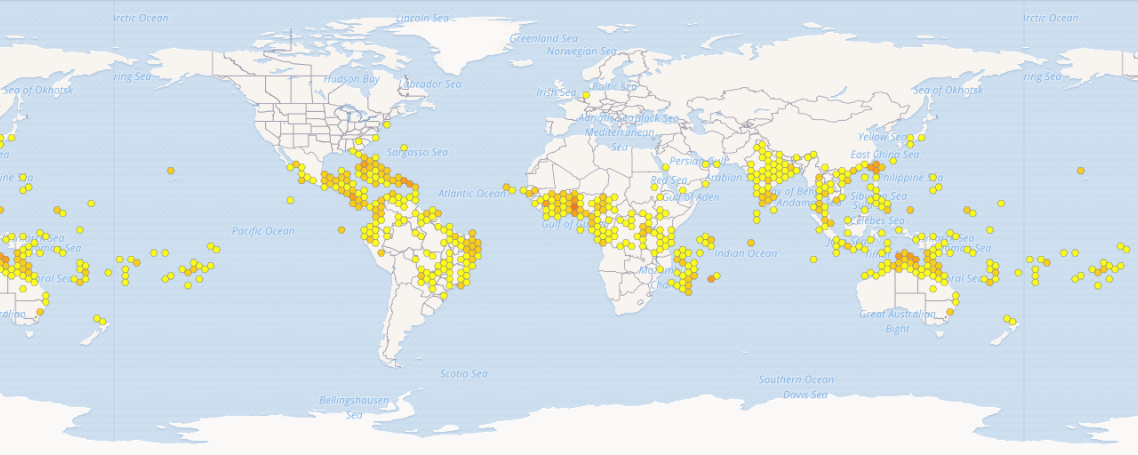
| Originaria delle regioni tropicali e subtropicali di tutto il mondo, inclusi Asia, Africa e America Latina. Il suo habitat tipico comprende aree aperte e soleggiate, terreni disturbati, bordi stradali, campi coltivati, giardini, aree ruderali e talvolta anche boschi aperti e margini forestali. Predilige suoli ben drenati, sabbiosi o limosi, ma si adatta a una vasta gamma di condizioni di suolo, spesso anche poveri di nutrienti. Cresce meglio in climi caldi e umidi con abbondante luce solare, ma può tollerare periodi di siccità. La sua diffusione è favorita dalla produzione di numerosi piccoli semi che vengono facilmente dispersi dal vento, dall'acqua e dall'attività umana. È una specie comune in ambienti antropizzati e in aree dove la vegetazione naturale è stata alterata. La sua capacità di crescere rapidamente e produrre molti semi le conferisce un carattere spesso infestante in alcune regioni agricole. |
| DISTRIBUZIONE IN BASE ALLE OSSERVAZIONI UMANE |
 |
ANNUNCIO PUBBLICITARIO
FINE ANNUNCIO
PERIODO BALSAMICO...
| DURANTE LA STAGIONE UMIDA (MAGGIO-OTTOBRE), QUANDO LA PIANTA RAGGIUNGE LA MASSIMA CONCENTRAZIONE DI PRINCIPI ATTIVI |
DROGA UTILIZZATA...
| (Parti ricche in principi attivi) |
| INTERA PIANTA (FOGLIE, STELI E RADICI), ESSICCATA O FRESCA, RICCA DI LIGNANI (ES. FILLANTINA), TANNINI E ALCALOIDI |
AROMI DELLA DROGA...
| ERBACEO E LEGGERMENTE AMARO, CON NOTE TERROSE NELLE RADICI ESSICCATE |
SAPORI DELLA DROGA...
| AMAROGNOLO E ASTRINGENTE, DOVUTO AI TANNINI E AI COMPOSTI FENOLICI |
TOSSICITÀ:  BASSA BASSA |
| Motivazione: I dati tossicologici disponibili su Phyllanthus amarus Schumach. & Thonn. indicano generalmente buona tollerabilità alle dosi fitoterapiche tradizionali e negli studi sperimentali a breve termine. Gli effetti indesiderati documentati sono prevalentemente lievi e gastrointestinali. Esistono tuttavia dati limitati sulla sicurezza a lungo termine, in gravidanza e in associazione con farmaci ipoglicemizzanti, antipertensivi o epatometabolizzati. |
| EFFICACIA: !! DIPENDENTE DALLE SPECIFICHE E DALLE FORME TERAPEUTICHE |
| Motivazione: Sono disponibili studi clinici controllati e revisioni su specifici estratti di Phyllanthus amarus Schumach. & Thonn., soprattutto in ambito epatobiliare, antivirale e urolitiasico, ma i risultati risultano eterogenei, spesso dipendenti dal chemotipo, dal metodo estrattivo e dalla corretta identificazione tassonomica rispetto ad altre specie del genere Phyllanthus. Le evidenze più consistenti derivano da studi clinici limitati, studi in vivo animali e dati farmacologici sperimentali su lignani e tannini specifici. |
PRINCÍPI ATTIVI...
| Lignani: fillantina, ipofillantina, nirtetralina, filtetralina, lintetralina, urinatetralina, nirantrina, nirfilina, filnirurina, virgatusina, cubebina, secoisolariciresinolo Tannini idrolizzabili ed ellagitannini: geraniina, corilagina, acido ellagico, acido gallico, amariina, repandusina, brevifolina, brevifolina carbossilica, chebulagina, chebulinato, punicalagina Flavonoidi: quercetina, rutina, quercitrina, isoquercitrina, astragalina, kaempferolo, nicotiflorina, niruriflavone, fisetina, luteolina, apigenina Polifenoli fenolici: acido caffeico, acido ferulico, acido protocatecuico, acido clorogenico, acido vanillico, acido p-cumarico, metil gallato, etil gallato Triterpeni: lupeolo, acido oleanolico, acido ursolico, friedelina, epifriedelanolo, taraxerolo, glochidone Steroli fitosterolici: beta-sitosterolo, stigmasterolo, campesterolo, daucosterolo Alcaloidi: fillantidina, fillocrisina, securinina, norsecurinina Terpeni e diterpeni: fitolo, limonene, cariofillene, germacrene D, linalolo Tannini condensati: procianidine, catechina, epicatechina Saponine: saponine triterpeniche derivate da acido oleanolico e ursolico Polisaccaridi: arabinogalattani, ramnogalatturonani, mucopolisaccaridi eterogenei Acidi grassi e lipidi: acido linoleico, acido oleico, acido palmitico, acido stearico |
PROPRIETÀ E INDICAZIONI (Dettagli di Fitoterapia)
Confermate da studi scientifici e clinici Per Phyllanthus amarus Schumach. & Thonn sono disponibili evidenze cliniche limitate e qualitativamente eterogenee soprattutto in ambito epatologico, antivirale e metabolico. Gli studi clinici controllati disponibili risultano generalmente di piccole dimensioni, con estratti non uniformemente standardizzati e metodologie spesso non omogenee. Attività epatoprotettrice ed epatobiliare funzionale: alcuni studi clinici controllati e osservazionali hanno riportato riduzione di transaminasi e miglioramento di parametri biochimici epatici in soggetti con epatopatie lievi o infezione da virus epatitici, ma le evidenze restano insufficienti per confermare efficacia clinica definitiva. Sono disponibili revisioni critiche che evidenziano limiti metodologici e risultati non uniformi. Attività antivirale nell’epatite B: esistono studi clinici preliminari e alcune revisioni sistematiche che riportano possibile riduzione di marcatori virali in soggetti con infezione cronica da HBV; tuttavia i risultati sono contraddittori e non sufficienti per confermare un’efficacia terapeutica clinicamente consolidata. Attività ipoglicemizzante e modulante glicemico-metabolica: alcuni studi clinici preliminari hanno mostrato riduzione moderata della glicemia e miglioramento di parametri metabolici, ma le evidenze disponibili non consentono conclusioni definitive né standard terapeutici validati. Non risultano disponibili meta-analisi robuste o revisioni sistematiche di elevata qualità che confermino in modo definitivo specifiche indicazioni terapeutiche della specie. Con riscontro positivo in vitro o in modelli animali o nella fitoterapia documentata Attività epatoprotettrice antiepatotossica: supportata da numerosi studi in vivo animali su tossicità indotta da tetracloruro di carbonio, paracetamolo, etanolo e altri epatotossici. Sono documentati effetti antiossidanti, modulazione enzimatica epatica e riduzione della perossidazione lipidica. Evidenza prevalentemente preclinica. Attività antivirale: studi in vitro hanno documentato interferenza con replicazione di HBV e altri virus mediante inibizione enzimatica e modulazione trascrizionale. Le evidenze restano prevalentemente sperimentali. Attività antiossidante: ampiamente documentata in vitro e in vivo animale mediante riduzione dello stress ossidativo, scavenging radicalico e incremento di enzimi antiossidanti endogeni. Attività antinfiammatoria: evidenziata in modelli animali di infiammazione acuta e cronica con riduzione di mediatori proinfiammatori. Mancano conferme cliniche robuste. Attività nefroprotettiva: documentata in modelli animali di nefrotossicità e stress ossidativo renale; alcuni studi suggeriscono potenziale effetto protettivo sulla funzionalità renale. Attività urolitica e diuretica: presenti dati sperimentali animali e osservazioni fitoterapiche tradizionali coerenti con incremento della diuresi e riduzione della formazione litiasica urinaria. Evidenza clinica insufficiente. Attività ipoglicemizzante: supportata da modelli animali diabetici con riduzione glicemica e miglioramento di parametri metabolici; dati clinici ancora limitati. Attività ipolipidemizzante: studi animali mostrano riduzione di trigliceridi e colesterolo plasmatico. Mancano conferme cliniche solide. Attività gastroprotettiva: osservata in modelli animali di ulcera gastrica e danno mucosale con possibile coinvolgimento antiossidante e citoprotettivo. Attività immunomodulante: evidenziata in vitro e in vivo animale con modulazione citochinica e attività su cellule immunitarie; significato clinico non definito. Attività antiproliferativa e citotossica: diversi studi in vitro documentano effetti su linee cellulari tumorali, ma mancano evidenze cliniche e non è giustificata alcuna attribuzione antitumorale terapeutica. Uso storico e nella tradizione Nella medicina ayurvedica la specie è tradizionalmente utilizzata come rimedio epatobiliare, diuretico e depurativo. Nelle medicine tradizionali dell’India, Sri Lanka, Sud-Est asiatico e America tropicale è impiegata per ittero, disturbi epatici, calcolosi urinaria, infezioni urinarie e disturbi digestivi. Sono documentati usi etnomedici tradizionali per diabete, febbri, disturbi gastrointestinali, infiammazioni cutanee e supporto nelle infezioni virali. L’uso tradizionale nelle epatiti virali precede la validazione farmacologica moderna ma non costituisce prova clinica di efficacia terapeutica.
Bibliografia (proprietà e indicazioni)
| AVVERTENZE
(Le avvertenze includono segnali di rischio basati su evidenze precliniche, plausibilità farmacologica o casi isolati) POSSIBILE POTENZIAMENTO DELL’EFFETTO IPOGLICEMIZZANTE IN SOGGETTI TRATTATI CON FARMACI ANTIDIABETICI O INSULINA. L’AVVERTENZA DERIVA DA STUDI IN VIVO ANIMALI, DATI FARMACOLOGICI SPERIMENTALI E LIMITATE OSSERVAZIONI CLINICHE CHE DOCUMENTANO ATTIVITÀ IPOGLICEMIZZANTE DELLA SPECIE. POSSIBILE EFFETTO ADDITIVO CON FARMACI ANTIPERTENSIVI. STUDI IN VIVO E SPERIMENTALI INDICANO ATTIVITÀ VASODILATATORIA E IPOTENSIVA MODERATA ASSOCIATA AD ALCUNI LIGNANI E POLIFENOLI DELLA SPECIE. SONO RIPORTATE POSSIBILI INTERAZIONI CON FARMACI EPATOMETABOLIZZATI ATTRAVERSO SISTEMI ENZIMATICI EPATICI, IN PARTICOLARE CYP450, SULLA BASE DI EVIDENZE IN VITRO E FARMACOLOGICHE ANCORA INCOMPLETE. I DATI CLINICI DIRETTI RIMANGONO LIMITATI. L’USO PROLUNGATO AD ALTE DOSI NON È ADEGUATAMENTE SUPPORTATO DA DATI TOSSICOLOGICI CRONICI NELL’UOMO. LE EVIDENZE DISPONIBILI DERIVANO PREVALENTEMENTE DA STUDI ANIMALI A BREVE E MEDIO TERMINE. IN GRAVIDANZA E ALLATTAMENTO NON SONO DISPONIBILI DATI CLINICI SUFFICIENTI SPECIFICI SULLA SICUREZZA DELLA SPECIE; ALCUNI STUDI SPERIMENTALI SUGGERISCONO POSSIBILI EFFETTI SULLA FERTILITÀ E SULL’ATTIVITÀ UTERINA A DOSAGGI ELEVATI, PERTANTO L’IMPIEGO NON È RACCOMANDATO IN ASSENZA DI SUPERVISIONE MEDICA. LA CORRETTA IDENTIFICAZIONE BOTANICA RAPPRESENTA UNA CRITICITÀ RILEVANTE NELLA LETTERATURA SCIENTIFICA RELATIVA A PHYLLANTHUS AMARUS SCHUMACH. & THONN., FREQUENTEMENTE CONFUSA CON PHYLLANTHUS NIRURI L. E PHYLLANTHUS FRATERNUS G.L.WEBSTER; CIÒ LIMITA LA STANDARDIZZAZIONE DELLE EVIDENZE FARMACOLOGICHE E CLINICHE DISPONIBILI. |
| CONTROINDICAZIONI
(Le controindicazioni si basano su evidenze cliniche dirette, cioè dati da studi clinici, osservazionali o casistiche solide che dimostrino che l’uso della pianta è da evitare in specifiche condizioni o popolazioni) NON SONO DISPONIBILI CONTROINDICAZIONI ASSOLUTE UNIVERSALMENTE VALIDATE DA STUDI CLINICI CONTROLLATI SPECIFICAMENTE RIFERITI A PHYLLANTHUS AMARUS SCHUMACH. & THONN. SONO TUTTAVIA RIPORTATI CASI DI EVITAMENTO PRUDENZIALE NELLA PRATICA FITOTERAPICA IN SOGGETTI CON IPERSENSIBILITÀ DOCUMENTATA ALLA SPECIE O AI SUOI PREPARATI. |
INCOMPATIBILITÀ...
(Farmaci o sostanze da evitare per interazioni avverse o incompatibilità farmacologiche)
| ANTIAGGREGANTI PIASTRINICI |
| ANTICOAGULANTI |
| ANTIDIABETICI ORALI (POTENZIAMENTO) |
| ANTIPERTENSIVI |
| EPATOTOSSICI |
| FARMACI EPATOMETABOLIZZATI (CYP450) |
| FARMACI METABOLIZZATI DAL CYP2C9 |
| FARMACI METABOLIZZATI DAL CYP3A4 |
| IMMUNOMODULANTI |
| IMMUNOSOPPRESSORI |
| INSULINA (POTENZIAMENTO) |
| IPOGLICEMIZZANTI E ANTIDIABETICI |
ORGANI UMANI...
(Organi coinvolti nell'azione fitoterapica)
ESTRATTI...
Estratti standardizzati, integratori e omeopatici basati su evidenze scientifiche e sicurezza d'uso
| Estratti di Phyllanthus amarus Schumach. & Thonn (PHYLLANTHUS) Estratto secco nebulizzato e titolato delle parti aeree standardizzato in fillantina e ipofillantina. I titoli più utilizzati nei preparati fitoterapici destinati al supporto epatobiliare e metabolico sono compresi tra 0,5% e 2% di lignani totali oppure tra 2% e 10% di polifenoli totali. Le posologie comunemente utilizzate negli studi clinici e nei preparati commerciali variano da 300 mg a 1200 mg al giorno suddivisi in 2 o 3 somministrazioni. Estratto idroalcolico fluido delle parti aeree fresche o essiccate con rapporto droga:estratto generalmente compreso tra 1:1 e 1:3. Utilizzato soprattutto per supporto epatico, digestivo e urinario. La posologia abituale varia da 2 ml a 8 ml al giorno suddivisi in più assunzioni. Estratto molle concentrato ottenuto mediante estrazione idroetanolica standardizzato in lignani e tannini ellagici. Impiegato prevalentemente in formulazioni epatoprotettive e antiossidanti. Le dosi giornaliere equivalenti di estratto molle corrispondono generalmente a 1 g–3 g di droga secca. Estratto acquoso spray dried standardizzato in composti fenolici totali, con particolare riferimento a corilagina, geraniina ed ellagitannini. Utilizzato soprattutto in formulazioni nutraceutiche per metabolismo glicemico, stress ossidativo e funzionalità epatica. Posologia tipica compresa tra 250 mg e 1000 mg al giorno. Polvere micronizzata delle parti aeree incapsulata o compressa. Le dosi tradizionalmente documentate e utilizzate negli studi sperimentali variano da 2 g a 6 g al giorno in somministrazioni suddivise. Tintura madre fitoterapica preparata da pianta fresca con titolo alcolico generalmente compreso tra 45% e 70%. Utilizzata in alcuni sistemi fitoterapici tradizionali per supporto epatobiliare e urinario. La posologia comunemente impiegata varia da 20 a 60 gocce da una a tre volte al giorno. Estratti combinati standardizzati con altre piante epatoprotettive o metaboliche quali Silybum marianum, Andrographis paniculata o Curcuma longa. In tali preparazioni il contenuto di lignani di Phyllanthus amarus viene generalmente mantenuto entro intervalli equivalenti a 200–600 mg di estratto secco al giorno. Preparazioni omeopatiche denominate Phyllanthus amarus o Chanca piedra disponibili soprattutto come tintura madre omeopatica, diluizioni decimali e centesimali. Le diluizioni più comuni comprendono D1, D3, D6, 5CH e 9CH. L’impiego omeopatico non dispone di conferme cliniche robuste specifiche sulla specie e segue criteri propri della pratica omeopatica. |
TISANE...
Tisane, composizioni e preparazioni basate su evidenze scientifiche e sicurezza d'uso
| Infuso epatobiliare tradizionale con Phyllanthus amarus. Utilizzare 2–3 g di parti aeree essiccate in 200 ml di acqua a 90–95 °C per 10 minuti. Assumere fino a due volte al giorno dopo i pasti. La formulazione viene impiegata tradizionalmente per supporto epatico e digestivo lieve. Infuso combinato epatoprotettivo con Phyllanthus amarus 2 g, Silybum marianum semi triturati 3 g e Curcuma longa rizoma 1 g in 250 ml di acqua calda per 10–15 minuti. Assunzione consigliata una o due volte al giorno dopo i pasti principali. La combinazione è utilizzata in fitoterapia integrativa per supporto antiossidante ed epatobiliare. Decotto urinario con Phyllanthus amarus 3 g e Orthosiphon stamineus 2 g. Bollire in 300 ml di acqua per circa 10 minuti e lasciare riposare ulteriori 10 minuti. Assumere una o due volte al giorno. La formulazione è impiegata nella tradizione fitoterapica per supporto diuretico e funzionalità delle vie urinarie. Infuso metabolico con Phyllanthus amarus 2 g, Gymnema sylvestre 1,5 g e Cinnamomum verum corteccia 0,5 g in 250 ml di acqua calda per 10 minuti. Utilizzato come coadiuvante dietetico nel supporto del metabolismo glucidico e lipidico. Non eccedere due somministrazioni quotidiane senza supervisione professionale. Tisana digestiva e coleretica con Phyllanthus amarus 2 g, Taraxacum officinale radice 2 g e Mentha × piperita foglie 1 g. Infondere in 250 ml di acqua per 10 minuti. Assunzione dopo i pasti principali per favorire il comfort digestivo e la funzionalità biliare. Decotto tradizionale epatorenale con Phyllanthus amarus 4 g e Boerhavia diffusa 3 g in 400 ml di acqua, ridotti a circa 200 ml mediante bollitura lenta di 15–20 minuti. Utilizzato in sistemi tradizionali ayurvedici per supporto epatico e drenaggio urinario. Assunzione generalmente limitata a una o due volte al giorno. Infuso antiossidante con Phyllanthus amarus 2 g, Camellia sinensis tè verde 1 g e Zingiber officinale rizoma 0,5 g. Infusione di 8 minuti in 200 ml di acqua. Utilizzato per supporto antiossidante e digestivo. Evitare l’assunzione serale in soggetti sensibili alla caffeina. Preparazione fitoterapica liquida composta da estratto fluido di Phyllanthus amarus associato a Cynara cardunculus e Rosmarinus officinalis in rapporto bilanciato. Le dosi tradizionalmente utilizzate corrispondono a circa 1–3 g al giorno equivalenti di droga secca di Phyllanthus amarus suddivisi in due assunzioni prima dei pasti. |
| Consulta studi scientifici disponibili online sulle proprietà antitumorali di Phyllanthus amarus Schumach. & Thonn |
ANNUNCIO PUBBLICITARIO
FINE ANNUNCIO
NOTE VARIE E STORICHE...
Ricerche di articoli scientifici su Phyllanthus amarus Schumach. & Thonn 👉

👉

👉

|

.png?r=1793155724)
 Altre Foto e Immagini di PHYLLANTHUS
